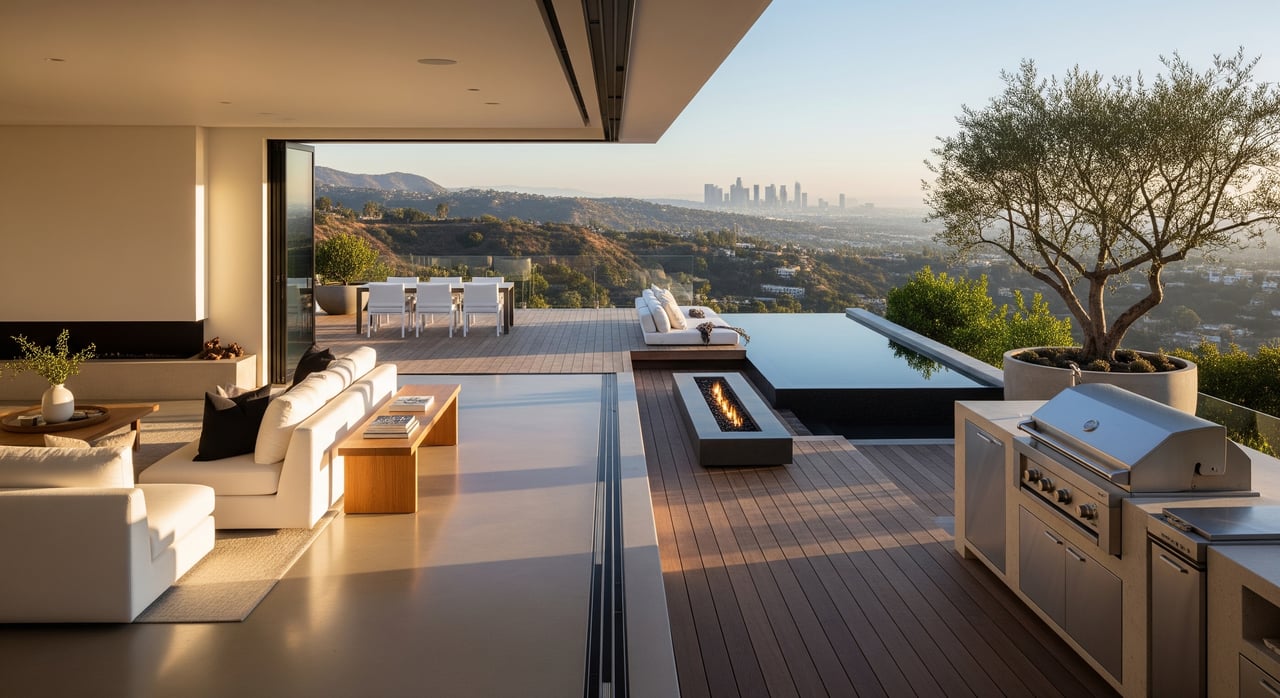
Imagine sliding a wall of glass open and letting the city lights become your backdrop. If you are drawn to Hollywood Hills homes, you likely want that seamless flow between indoors and out, without sacrificing comfort, safety, or long-term value. In this guide, you will learn how to plan indoor-outdoor living that suits hillside lots, local rules, and resale expectations. Let’s dive in.
Know your hillside setting
Hollywood Hills sits in a Mediterranean climate with mild winters and dry summers, and microclimates can shift light, wind, and evening temperatures just from one ridge to the next. Year-round outdoor use is realistic if you plan for summer shade and cooler evenings. For climate context and weather trends, review resources from NOAA.
Steep terrain shapes almost every design choice. You will likely work with terraces, split levels, or cantilevered elements to capture views while navigating grade changes. Expect a mix of steps and platforms between zones, which adds both design opportunity and engineering needs.
Wildfire safety is part of everyday life in much of the Hills. Many properties sit within very high fire hazard zones, so defensible space and ember-resistant detailing matter for decks, screens, and planting. See the Los Angeles guidance on brush clearance and look to CAL FIRE for statewide best practices on defensible space.
Seismic and geotechnical considerations also drive design. Hillside homes can need geotechnical studies to confirm slope stability, drainage, and foundation design. For seismic context and hazard insights, consult the USGS.
Water conservation is part of responsible outdoor living. Native or Mediterranean-style plant palettes, efficient irrigation, and smart water features help you conserve. Review local programs through the Los Angeles Department of Water and Power.
Plan the indoor-outdoor flow
Orient for views and sun
Start by establishing a primary indoor-outdoor axis from your main living area toward your strongest view. Frame that vista while considering solar exposure and prevailing breezes. This helps reduce heat gain, glare, and wind issues later.
Sequence spaces for comfort
Create a gentle progression from inside to out. Think interior living, then a covered terrace or lanai, then an open patio, then a garden or viewing platform. This sequence gives you options across seasons and helps the home feel larger without adding enclosed square footage.
Preserve privacy without blocking views
Use strategic screening, green walls, or layered plantings to shield sightlines while keeping key vistas open. Design guardrails, planters, or low partitions to feel intentional, not like afterthoughts.
Open walls and windows
Choose the right door system
Multi-panel sliding or folding doors, large sliders that pocket into walls, and well-proportioned pivot doors all work well in the Hills. Prioritize low or flush thresholds for accessibility and smooth flow. Confirm that water management at the sill keeps interiors dry.
Coordinate structure and glass
Larger openings need structural support that respects hillside loads. Work with your architect and structural engineer to size lintels and verify load paths back to the foundation. Use safety-rated glazing and consider higher performance glass to manage heat gain while keeping views crisp.
Shade, comfort, and year-round use
Covered outdoor rooms, pergolas with adjustable louvers, and retractable awnings allow you to tune sun and shade through the year. Add motorized screens where bugs are a concern, and layer in ceiling fans for summer afternoons. For cool evenings, integrate infrared or gas heaters, and plan dimmable lighting for a relaxed mood.
Materials that last on a hillside
Choose durable finishes that can handle UV exposure, temperature swings, and hillside microclimates. Textured porcelain or stone pavers, premium composite decking, and hardwoods used within code guidelines are all proven choices. Look for hardware and railings in stainless or powder-coated aluminum, and use outdoor-rated fabrics that resist fading.
In wildfire-prone areas, favor ignition-resistant materials near the structure and maintain defensible space. Thoughtful material choices at decks, soffits, vents, and screens can reduce ember risks while still looking refined.
Landscape design that saves water and reduces risk
Lean into drought-tolerant and native planting to lower irrigation needs and support resilience. Use layered plantings to soften noise and wind, and place taller elements where they protect privacy without cutting into views. Where grading allows, add permeable paving, bioswales, or rain gardens to slow runoff and support drainage goals.
For high fire areas, pair water-wise plants with spacing and maintenance that meet local defensible space guidance. The LAFD brush clearance program is a useful reference, and CAL FIRE is the statewide authority on defensible space.
Pools, spas, and hillside terraces
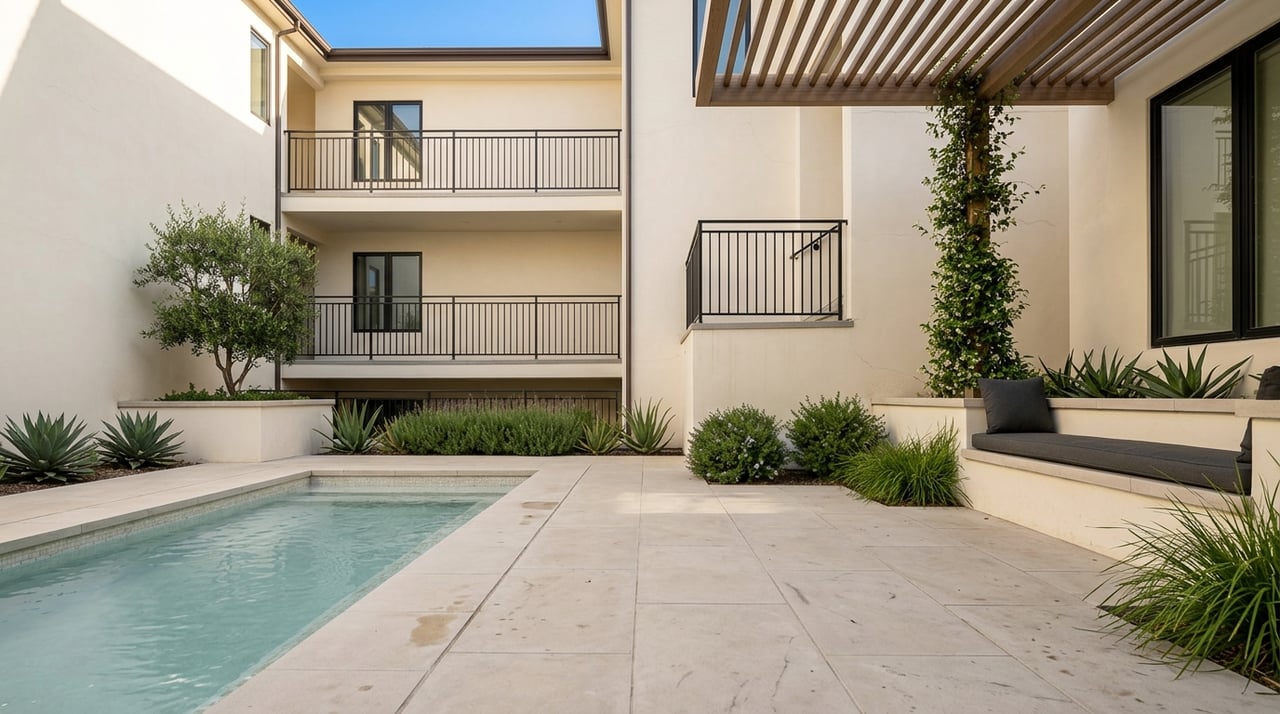
Pools, plunge pools, and spas can transform a view home, but they add structural, waterproofing, and drainage complexity. Coordinate early with your design team to confirm loads, setbacks, and equipment placement. Plan for access to mechanicals and choose efficient recirculating and filtration systems to reduce maintenance.
Guardrails should preserve views and meet safety standards. Glass railings are common, but they must be safety-rated and properly anchored. Treat steps between levels with non-slip finishes, consistent risers, and quality lighting.
Permits, safety, and drainage
Most meaningful exterior changes in the City of Los Angeles require permits and plan review. That includes large door openings, new decks or significant terraces, retaining walls, pools or spas, grading, and visible exterior changes. Start early with the Los Angeles Department of Building and Safety and check hillside and zoning considerations with City Planning.
Hillside work often requires a geotechnical report to address slope stability, drainage, and bearing capacity. Coordinate structural engineering for large openings, cantilevers, decks, and retaining walls.
Good drainage underpins durability. Plan positive grading away from structures, discreet downspout routing, and subdrains where needed. Los Angeles encourages Low Impact Development techniques such as permeable paving and bioretention, which can reduce runoff and protect slopes.
What boosts resale in the Hills
Buyers in Los Angeles value views, privacy, and usable outdoor rooms that expand daily life. Features that live like extra square footage tend to show well: covered terraces, outdoor kitchens with power and lighting, and flexible shade that keeps spaces comfortable.
Well-executed, code-compliant work with durable materials usually preserves or improves value. Items that can hurt appeal include unpermitted changes, poor drainage that telegraphs future problems, and high-maintenance finishes that fade quickly in the sun.
Design for easy upkeep. Accessible equipment, simple irrigation zones, efficient filtration, and robust materials communicate confidence to future buyers and reduce surprises during inspections.
Your step-by-step checklist
Before you design
- Confirm lot lines, easements, and any hillside or special overlay zones.
- Check your property’s fire hazard designation and vegetation rules.
- Review zoning and any historic constraints that could limit exterior changes.
- Walk the site with an architect or landscape architect to study sun, wind, privacy, and access.
During design and construction
- Define the main indoor-outdoor axis and door strategy, from partial openings to full pocketing systems.
- Select materials and glazing that balance performance, safety, and maintenance.
- Engineer drainage for terraces, decks, and retaining walls, including downspouts and subdrains.
- Include geotechnical and structural scopes in proposals for hillside work.
- Ensure permit drawings cover grading, structure, guardrails, HVAC, gas, and plumbing as needed.
- Map power, lighting, and data for outdoor kitchens, heaters, and entertainment.
- Plan defensible space and choose fire-conscious plant palettes near the house.
The right team for a smooth project
- Architect or designer with hillside experience
- Landscape architect skilled in Southern California planting and irrigation
- Geotechnical and structural engineers for slopes, decks, and large openings
- Licensed contractor familiar with LADBS permitting and hillside work
- Civil engineer for drainage and retaining walls when grading is involved
- Permitting consultant or expeditor to streamline reviews
- Fire safety consultant for high-risk parcels
Bring it all together
A beautiful indoor-outdoor life in the Hollywood Hills is not just about big doors and a great view. It is about aligning design, engineering, and maintenance so your spaces feel effortless day to day and compelling at resale. If you want guidance from a design-forward, concierge-style partner who understands hillside rules and buyer expectations, connect with Mikka Johnson to explore options for your home.
FAQs
What permits do I need to add a large sliding door in a Hollywood Hills home?
- Structural changes to exterior walls typically require permits and plan review through the Los Angeles Department of Building and Safety, and hillside projects may also trigger geotechnical review.
How do wildfire zones affect outdoor design in the Hollywood Hills?
- You should plan defensible space, select ignition-resistant materials near the home, and follow local guidance such as the LAFD brush clearance program.
What are low-maintenance materials for terraces and decks on a hillside?
- Textured porcelain or stone pavers, premium composite decking, powder-coated aluminum or stainless railings, and outdoor-rated fabrics help reduce upkeep while handling UV and weather.
How should I manage drainage for a new deck on a sloped Los Angeles lot?
- Provide positive grading away from structures, route downspouts to safe discharge points, and use subdrains where needed to protect slopes and foundations.
Do pools or spas require special engineering in the Hollywood Hills?
- Yes, hillside pools and spas often need structural, waterproofing, and drainage design, along with permits; coordinate early with your design team and LADBS.
Does indoor-outdoor design improve resale value in the Hills?
- Well-executed, code-compliant outdoor rooms that function like extra living space and use durable materials tend to enhance marketability and support long-term value.