Thinking about adding an ADU to your Culver City property? You are not alone. With rising housing costs and more multigenerational households, homeowners are turning to ADUs for flexible space and steady income. The good news is California law makes ADUs more attainable than ever.
In this guide, you will learn how ADUs work in Culver City, what state rules mean for you, the steps to permit and build, ways to finance, and design choices that improve livability and ROI. You will also get a practical checklist to help you move forward with confidence. Let’s dive in.
What counts as an ADU
An ADU is an independent residential unit on the same lot as a primary home. You can create an ADU by:
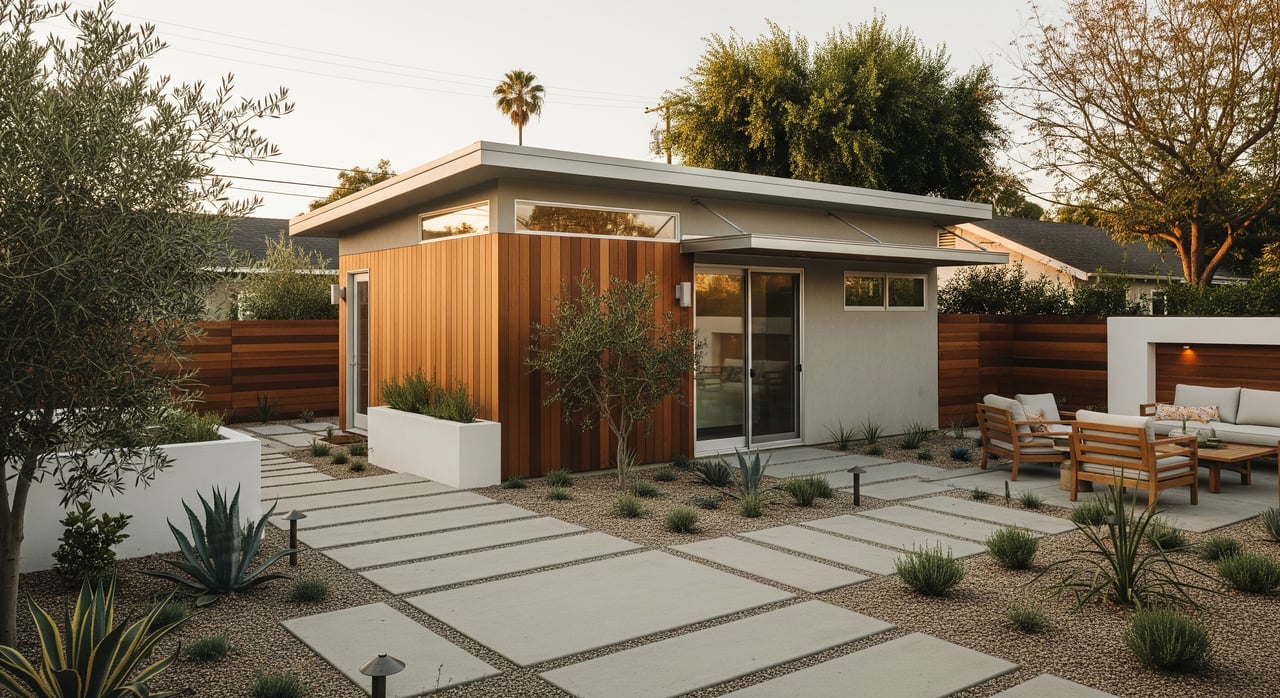
- Building a detached backyard unit.
- Attaching a new unit to your home.
- Converting an existing space like a garage or bonus room.
- Creating a junior ADU (JADU) within the main home with a small kitchen and separate entrance.
The number and type of ADUs allowed on each property depend on zoning and state rules. State law permits multiple ADU paths on many lots, but Culver City applies local standards within those limits. Always confirm what is allowed on your specific parcel before you design.
State rules that help owners
Ministerial approval and timing
California requires cities to use a ministerial, non-discretionary process for most ADUs. If your application is complete, the city must issue a decision within a defined timeline, commonly 60 days. This helps keep projects moving.
Parking relief
State law limits how cities can require parking for ADUs, especially for units near public transit, conversions of existing garages, or where on-street permit parking is not offered to tenants. Many projects qualify for reduced or no new parking.
Size and height basics
State law provides flexibility on ADU size and prevents overly strict limits. In many cases, ADUs up to 1,200 square feet are possible, subject to local standards. Culver City’s exact square footage, height, and lot coverage rules should be confirmed for your address.
No owner-occupancy for many ADUs
For ADUs built under recent laws, cities cannot require owner-occupancy for a defined period. This gives you flexibility whether you plan to live on-site or not. Check current rules if your site is in a special district.
Fees and utility connections
Local agencies can assess building, plan check, and utility fees, but state law limits how these apply, especially for smaller ADUs. Expect to review sewer and water capacity, potential lateral upgrades, and connection costs during planning.
Multifamily properties
State rules allow ADU options on multifamily parcels in many scenarios. The exact number and placement are set by local ordinance within state limits. Confirm specifics with Culver City Planning if you own a duplex or larger building.
What to confirm in Culver City
Before you hire an architect, verify the local details that will shape your budget and design:
Allowed types and count
Confirm whether your zoning allows detached, attached, garage conversions, and JADUs, and how many units you can build on your lot type.
Size, setbacks, and height
Ask how Culver City measures ADU floor area, what setbacks apply for side and rear yards, and the maximum height permitted. Conversions may have different rules.
Parking and EV readiness
Clarify whether any parking is required for your project and if EV-ready features are triggered. Many ADUs qualify for parking reductions based on state criteria.
Design review and overlays
Check whether your address sits in a historic district or special overlay zone. Some areas have added design standards that can affect exterior materials, windows, or roof forms.
Building and energy codes
Confirm the current editions of the California Building Code and Title 24 energy standards the city enforces. Ask about reach codes or electrification requirements that may influence HVAC, water heating, or solar readiness.
Fees and utilities
Request the city’s fee schedule for plan check and building permits. Coordinate early with utilities on sewer, water, and electric capacity, which can drive cost and timeline.
Submittal and processing
Ask if Culver City offers pre-application meetings, online submittal, and the expected plan check cycles. Even with ministerial review, corrections and resubmittals can add time.
Permitting workflow in plain English
- Pre-application and site checks: Confirm zoning, setbacks, easements, utility locations, and any overlays. Many owners order a site survey for accuracy.
- Full application: Submit site plan, floor plans, elevations, structural and Title 24 energy documents, and a utility plan. Some sites need soils information.
- Plan check and revisions: Respond to building, plumbing, electrical, and energy comments. Your designer and engineer will handle corrections.
- Construction and inspections: Obtain your permits, build, pass inspections, and receive a certificate of occupancy.
Typical timeline
Once your application is complete, state law requires a ministerial decision within a set window, commonly 60 days. Design, engineering, utility coordination, and contractor bidding often take additional months. Build time varies by scope and contractor availability.
Common hurdles and how to avoid them
- Utility upgrades: Sewer lateral or water service capacity may need work. Budget for this early and confirm with providers.
- Encroachments and easements: A survey can prevent costly re-designs.
- Overlay and historic standards: If applicable, expect added design coordination.
- HOA approvals: If you have an HOA, obtain written confirmation on ADU allowances before you invest in plans.
Pro tip: Schedule a brief consult with planning staff and your utility providers before you finalize design. It can save weeks later.
Renting, rules, and income
Local demand drivers
Culver City benefits from strong Westside job centers, transit access, and desirable amenities. That mix tends to support steady demand for well-designed studio and one-bedroom ADUs. Verify current rent ranges with local property managers when you underwrite your project.
Short-term vs long-term rentals
Short-term rental rules shift often. Before you plan an Airbnb strategy, confirm Culver City’s current short-term rental policy, any registration requirements, and whether your HOA or insurer limits short stays. Many owners choose long-term leases for stability and compliance.
Rent control and tenant protections
Understand how statewide tenant protection laws or any local rent stabilization rules interact with newly built ADUs. Exemptions vary by property type and year built. An attorney or housing office can clarify obligations on notices, security deposits, and evictions.
Insurance and property taxes
An ADU can change your coverage needs and liability profile. Speak with your insurance provider early. New construction can increase assessed value, so consult the county assessor or a tax advisor to model future taxes.
Financing your ADU
You have several paths to fund an ADU:
- Cash or savings for the simplest, fastest approach.
- Home equity line of credit or home equity loan.
- Renovation or construction loan for larger projects.
- Refinance to include construction costs.
- Specialized ADU or rehab programs where available.
Some lenders consider projected ADU rent in debt-to-income calculations, while others do not. Talk with lenders up front, obtain pre-qualification, and collect term sheets so you can compare total cost and draw schedules.
Design ideas that pay you back
For rental appeal
- Provide a private entrance and a small outdoor patio or yard.
- Include in-unit laundry and a full kitchen for true livability.
- Use durable finishes and sound insulation for comfort and lower turnover costs.
- Maximize natural light with smart window placement and glass doors.
For multigenerational living
- Favor single-level layouts or a ground-floor bedroom.
- Plan zero-step entries, wider doorways, and slip-resistant flooring.
- Add flexible zones for a caregiver, workspace, or hobbies.
- Provide separate HVAC controls for comfort and privacy.
For sustainability and future-proofing
- Choose efficient, all-electric systems like heat pump HVAC and water heaters.
- Frame the roof to be solar-ready and consider battery storage down the line.
- If parking is required, make it EV-charging ready.
Quick homeowner checklist
- Zoning and overlays confirmed for your address.
- ADU type and count allowed on your lot.
- Maximum size, height, setbacks, and how floor area is measured.
- Parking requirement and any transit-based waivers.
- Fee schedule for plan check, permits, and utility connections.
- Utility capacity and likely upgrades for sewer, water, and electric.
- Building code and Title 24 energy requirements.
- Design review triggers in historic or special districts.
- HOA rules and written approval process.
Work with a design-forward local advisor
An ADU is both a lifestyle and financial decision. The right team helps you confirm feasibility, line up financing, coordinate vendors, and make design choices that attract quality tenants or support family needs. If you want a concierge approach that blends market expertise with design sensibility, connect with Mikka Johnson to map your next steps.
FAQs
How big can an ADU be in Culver City?
- State law allows generous ADU sizes in many cases, but you should confirm Culver City’s current maximums and how floor area is calculated for your specific lot.
Do I need to provide parking for an ADU in Culver City?
- State rules limit parking requirements, especially near transit or for garage conversions, but you should verify Culver City’s current standard and any EV-ready triggers.
How long does ADU permitting take in Culver City?
- For complete applications, state law requires a ministerial decision within a set period, commonly 60 days; design, engineering, and plan check corrections can add time.
Can I use my ADU for short-term rentals in Culver City?
- Short-term rental policies change, so check Culver City’s current rules and your HOA and insurance before planning Airbnb or similar stays.
Will building an ADU increase my property taxes?
- New construction typically increases assessed value; contact the county assessor or a tax advisor to estimate the impact for your property.
Can my HOA stop me from building an ADU?
- Recent state laws limit outright HOA bans, but associations can apply reasonable design and safety conditions; get written confirmation from your HOA early.
What financing options work best for an ADU?
- Many owners use HELOCs, construction loans, or a refinance; ask lenders whether they will count projected ADU rent toward qualification and compare total costs.