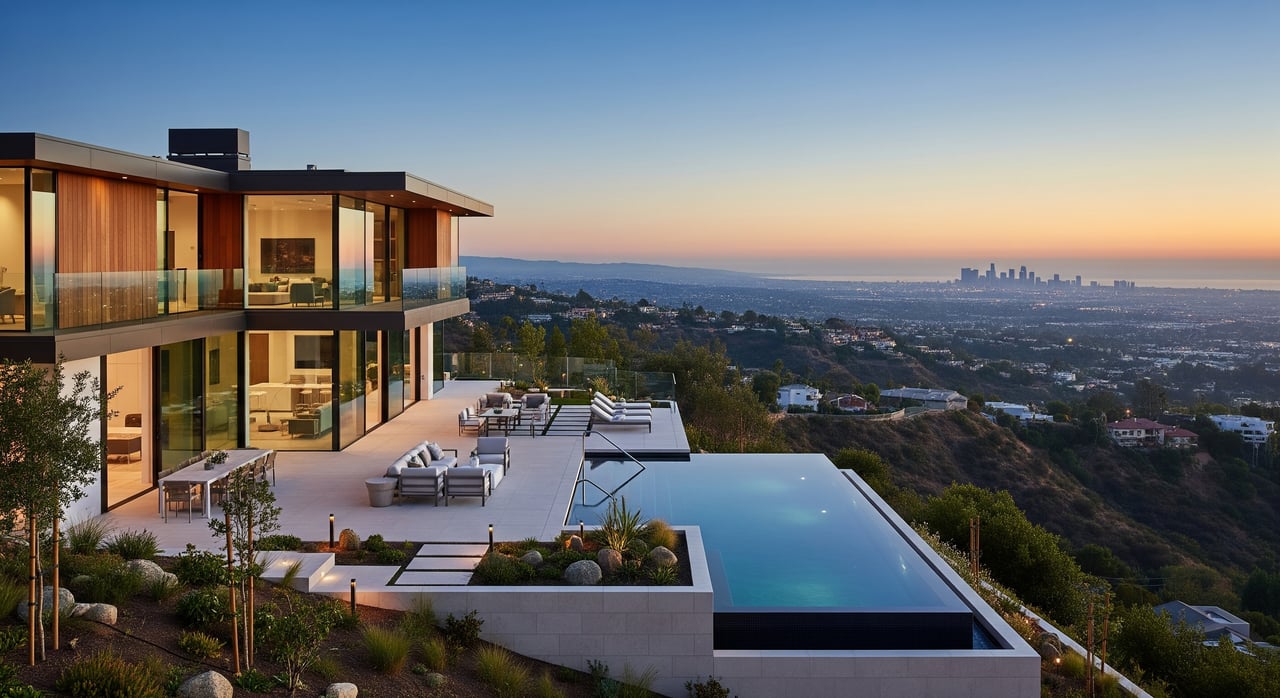
Is your Hollywood Hills view worth 5 percent or 30 percent more? Pricing a view home here is not guesswork. You want a clear framework that reflects how buyers value skyline, ocean, and canyon panoramas, while accounting for privacy, access, and risk. In this guide, you’ll learn how to pick and adjust comps, translate view quality into numbers, and set a confident list-price band. Let’s dive in.
What really drives value
View quality and type
Your view is more than a pretty backdrop. Buyers pay most for west-facing sunset and ocean panoramas, along with full downtown skyline scenes. Canyon and tree-framed vistas are typically mid-tier. Thin slivers or obstructed views add little. Also consider permanence. If a buildable lot sits in your sightline, or there is no recorded view easement, buyers will discount future risk.
Quick checks:
- What direction does the main living area face, and is it panoramic or partial?
- Are there vacant or buildable parcels below you in the view corridor?
- Do any easements or covenants protect your sightlines?
Privacy and sightlines
In the Hills, privacy is a premium. Distance to neighbors, hedging, fencing, a gated approach, and thoughtful window placement all add value. Buyers pay for the feeling of retreat in an urban setting, especially when the view reads as uninterrupted.
Lot usability and build potential
Not all hillside lots are equal. Usable flat pads, terrace-able slopes, and a legal building envelope make room for a pool, larger decks, an ADU, or a bigger garage. Since outdoor living and added square footage are prized here, buyers pay for workable land.
Access and circulation
Daily access matters. A steep, narrow driveway without a turnaround can push buyers away, even with a great view. Enclosed garage capacity and proximity to primary streets like Sunset Boulevard and Franklin Avenue can also influence your price.
Architectural pedigree and finishes
Recognized architects, an iconic design, or celebrity ownership can command a premium because of scarcity and marketing power. So can cohesive indoor to outdoor flow and high-end finishes that frame the view. Cluttered layouts, blocked sightlines, or mismatched remodels tend to underperform.
External nuisances
Helicopter traffic, freeway noise or visibility, erosion risk, and wildfire exposure are common concerns in the Hills. Expect discounts where these are pronounced, since buyers seeking tranquility and security will factor them into price.
Legal and permitting status
Permitted additions, a valid certificate of occupancy, and clean title are essential. Unpermitted living areas or open code cases often lower price and extend escrow timelines.
How to choose and adjust comps
Start local, then refine
- Begin with a 0.5 to 1 mile radius. Expand to 2 miles only if you cannot find similar view, lot type, and architecture. Micro-variation is real in the Hollywood Hills, so distance alone is not enough.
- Match core physicals first: bed/bath count, square footage, usable lot area, parking, and age/condition.
- Separate by view class. Do not compare skyline panoramas to framed canyon views without making adjustments.
Normalize for condition and finishes
If a comp is newly renovated to a high finish level and yours is original, apply a significant negative adjustment to your expected value, and vice versa. You can estimate this as a per-square-foot factor or a lump sum that reflects realistic upgrade costs in Los Angeles.
Adjust for view quality and permanence
Rank the view on a simple scale before you quantify it:
- Class A: panoramic and unobstructed ocean or full downtown skyline.
- Class B: substantial canyon or partial skyline.
- Class C: minor or obstructed view. Then layer the appropriate percentage range when you translate to price.
Focus on usable land, not acreage
Two lots can be the same size but have very different utility. A comp with a pool-ready pad or large, buildable terrace is not equivalent to a steep, unusable slope. Adjust accordingly.
Time-adjust for market movement
When comps are older than 90 days, apply a time adjustment for price movements. Fast-moving segments can make even 30 to 60 day comps stale. Use the most recent closed sales and be explicit about any trend you apply.
Read buyer intent
Look at days on market, list-to-sale ratio, and whether comps attracted multiple offers. If a nearby view home sold over asking with competition, it signals demand and may justify pricing toward the high end of your band.
A simple pricing framework
Step 1: Set a baseline
Determine a baseline price from non-view comps or the neighborhood’s median price per square foot that matches your size and condition. This gives you V0, the value before view and other premiums.
Step 2: Apply conservative adjustments
Use measured percentage ranges to reflect the specific strengths and weaknesses of your home. Typical ranges in the Los Angeles area include:
- View premium:
- Class A panoramic ocean or full skyline: +15% to +30%.
- Class B substantial canyon or partial skyline: +7% to +15%.
- Class C minor or obstructed: 0% to +7%.
- Exceptional, once-in-a-lifetime combinations can exceed +30%.
- Privacy premium:
- Significant privacy and screening: +5% to +15%.
- Moderate privacy: +2% to +7%.
- Lot usability and build potential:
- Room for pool, large decks, ADU, or garage: +5% to +20%.
- Severely constrained or steep, unusable lot: -5% to -20%.
- Access penalties:
- Very steep single-lane driveway with no turnaround: -3% to -12%.
- Architectural pedigree:
- Recognized architect, celebrity provenance, or landmark design: +10% to +30%.
- Nuisance discounts:
- Helicopter or freeway noise: -3% to -12%.
- Documented geotechnical or high wildfire exposure: -10% to -30%.
- Permitting or title issues:
- Unpermitted construction or open code cases: -5% to -25%.
Step 3: Build a list-price band
- Compute a conservative P_low and an optimistic P_high using the ranges above.
- Suggested band = V0 × (1 + P_low) to V0 × (1 + P_high).
Example illustration:
- If V0 = 1,500,000 and your conservative total premium is +12%, with an aggressive case at +22%, your band is 1,680,000 to 1,830,000.
Step 4: Decide where to land
- Choose the lower bound if you want a faster sale or to spark multiple offers in a tight-inventory pocket.
- Choose the upper bound if you can demonstrate view permanence, have strong comps at premium pricing, and plan robust marketing.
Pro tip: Build a one-page comp worksheet. List each comp, the raw price, and each adjustment for view, privacy, lot utility, access, condition, and any penalties. Your appraiser and buyers will appreciate the transparency.
Market, regulatory, and risk checks
Wildfire and insurance
Parts of the Hollywood Hills sit in higher wildfire hazard areas. Insurance availability and cost can change buyer math, which can pressure price or lengthen timelines. Be ready to discuss insurability and mitigations.
Hillside construction limits
Los Angeles hillside grading and building rules can constrain additions or increase structural costs. That means theoretical build potential may be worth less than it seems. Verify what is truly feasible.
View permanence and neighbor entitlements
There is no general statutory right to a view in California. Only a recorded easement protects it. Check neighboring zoning, recent permits, and any vacant parcels that could be developed in your sightline before claiming a long-term view premium.
Title and easements
Review title for view or access easements, shared driveways, and setback restrictions. Clear, well-documented rights support value and reduce buyer risk.
Appraisal strategy
Appraised value can lag list price when unique views and architecture are involved, especially if comps are thin. Prepare a concise valuation narrative with photos, a view classification table, and your comp worksheet to support the appraiser.
Demand cycles and buyer profile
View-home buyers are often emotion-forward, responding to storytelling and the lived experience of the view. At the same time, loan and appraisal limits matter. Align your pricing and marketing with the most likely buyer and their financing realities.
Marketing and positioning that earn the premium
Photography and media
- Drone, twilight, and stitched panoramas to convey scope and direction.
- Video walk-throughs that show the view from key rooms and decks.
Technical disclosures that lower risk
- Include recent surveys or contour maps, permit history, and any available geotechnical reports.
- Provide excerpts of title showing easements and any noise studies if relevant. This package reduces uncertainty and helps you defend a premium.
Staging and sightline management
- Remove window treatments that block views and open circulation to outdoor areas.
- Stage outdoor living zones to showcase how the view is used day and night.
- Where allowed, trim vegetation to reveal view corridors during the marketing window.
Price-and-launch strategy
- If targeting the top of your band, pre-market to known luxury buyer pools, schedule broker opens, and build urgency around a tight showing calendar.
- If seeking speed and multiple offers, price at the lower bound and leverage the first two weeks on market.
Prepare for appraisal or loan friction
- Hand the appraiser your comp worksheet, photos, and a summary of buyer interest.
- For rare architectural properties, be open to engaging cash or private clients if appraisal gaps emerge.
Putting it all together
When you price a Hollywood Hills view home, you are selling both lifestyle and scarcity. Start with a clean baseline from non-view comps, apply documented premiums and discounts for your exact view, privacy, lot utility, access, and pedigree, and test the number against live buyer signals. Then back it up with best-in-class visuals and a disclosure packet that lowers risk and builds trust. If you want a partner to orchestrate the pricing, prep, and presentation, reach out to Mikka Johnson for a concierge strategy built around your goals.
FAQs
How much does a downtown skyline view add in Hollywood Hills?
- Full, unobstructed skyline views commonly add about +15% to +30% over a comparable non-view baseline, with lower ranges used in cooler markets.
How do I know if my view is protected long term?
- Only a recorded view easement or restrictive covenant provides protection; verify neighboring zoning and permits to assess future build risks in your sightline.
Do steep driveways or tight access really hurt value?
- Yes, buyers discount difficult daily circulation; steep single-lane access with no turnaround can warrant -3% to -12% adjustments relative to easier-access comps.
How does wildfire risk affect pricing and sales?
- Higher hazard zones can limit insurance options and increase costs, which narrows the buyer pool and may require pricing concessions or more days on market.
What if an appraiser does not match our list price?
- Provide a comp worksheet, view classification, and demand evidence; if a gap remains, you can renegotiate, seek a reconsideration, or pivot to buyers with flexible financing.
Should I price at the top of my band or below it?
- Go high when your view is demonstrably permanent and you have strong comps and marketing; go low to drive competition and speed if inventory is tight and timing matters.