Selling in the Hollywood Hills rarely starts with a quick tidy-up. If you are hoping to hit the market on a specific date, the biggest surprise is often how many moving parts sit between “we should sell” and “we are ready to list.” The good news is that with the right plan, you can set realistic expectations, avoid common delays, and prep your home in a way that supports a smoother launch. Let’s dive in.
Why prep takes longer in Hollywood Hills
In Hollywood Hills, listing prep is often more involved than it is in flatter parts of Los Angeles. The area falls within Los Angeles fire-zone rules that apply to Hollywood and most of the city’s hilly and mountainous regions, and those rules create extra steps for many sellers.
The Los Angeles Fire Department says Very High Fire Hazard Severity Zone requirements apply year-round. That includes brush-clearance standards within 200 feet of structures and 10 feet of roadways, driveways, or combustible fences. On hillside properties, access can also be harder for vendors, haulers, and staging teams because narrow roads, tight curves, and choke points can slow work and scheduling.
A realistic timeline to get list-ready
For a very clean Hollywood Hills home with light cosmetic work, a practical estimate is about 2 to 4 weeks. For a more typical home that needs brush work, vendor coordination, and staging, 4 to 8 weeks is often more realistic. If the property needs repairs that trigger permits or plan review, the timeline can stretch beyond that.
This is not a fixed city rule. It is a practical working estimate based on official timelines for brush inspections, correction windows, permit paths, and plan-check scheduling.
Week 0: Strategy and scope
This is the planning week, and it matters more than most sellers expect. Before you choose a launch date, you need to confirm whether your home is in the Very High Fire Hazard Severity Zone, review brush-clearance status, and identify whether your prep list is mainly cosmetic or includes permit-triggered work.
This is also the best time to walk the property with a clear eye. You want to separate high-impact presentation updates from repairs that may affect timeline, disclosures, or compliance.
Week 1 to 2: Cleanup and wildfire prep
This phase usually covers decluttering, deep cleaning, paint touchups, yard cleanup, and defensible-space work. For many Hollywood Hills sellers, this is where the real timeline starts to take shape because exterior work can be more extensive than expected.
CAL FIRE advises homeowners to maintain 100 feet of defensible space and highlights the importance of a 0 to 5 foot ember-resistant zone near the structure. On steeper lots, vegetation spacing may need more attention, so hillside properties often require more pruning and clearance than flatter homes.
Week 2 to 4: Staging and photography
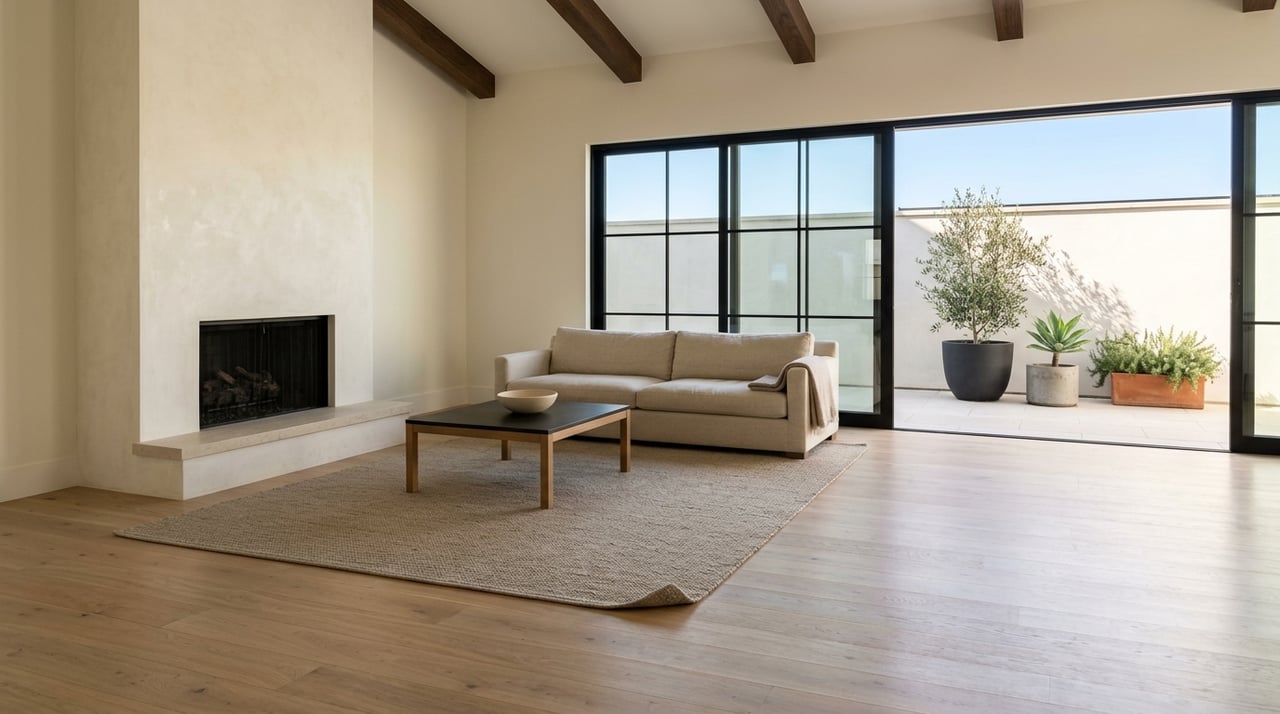
Once the home is clean, repaired, and visually calm, you can move into staging and media. This order matters because staging and photography work best when the home is already at its presentation standard.
According to the National Association of Realtors 2025 staging report, 83 percent of buyers’ agents said staging made it easier for buyers to visualize a home, and 49 percent of sellers’ agents said staging reduced time on market. The same report found that photos are highly important, which is one reason it makes sense to wait until the home is truly camera-ready.
Week 4 and beyond: Permits and reinspection
This is where some timelines widen. If the home needs work that requires review through the Los Angeles Department of Building and Safety, the process can move quickly for simple items but slow down for anything more involved.
LADBS says some permits may be issued the same day through Express Permit or e-permit paths. It also states that preliminary plan check appointments are scheduled within 5 business days, which helps for planning, but plan-checkable work can still push your launch timeline out.
The tasks that most affect timing
Not every prep item carries the same weight. In the Hollywood Hills, a few categories tend to determine whether your listing launches smoothly or gets delayed.
Brush clearance and compliance documents
This is one of the biggest timeline drivers for hillside sellers. LAFD requires year-round brush clearance in these zones, and the standards cover vegetation near the home as well as near roads, driveways, and combustible fences.
There is also a disclosure component. California Civil Code 1102.19 says that in high or very high fire hazard zones, sellers must provide defensible-space compliance documentation or a written buyer agreement tied to local compliance rules. LAFD also notes that AB38 disclosures apply to buyers in the Very High Fire Hazard Severity Zone, and sellers can request an AB38 inspection through the city process.
If the property is not compliant, the clock can slow quickly. LAFD gives owners 20 days to correct a brush-clearance violation after the first inspection, and the city’s brush-zone sweep can take about four to six weeks across the zone.
Small repairs versus permit-triggered work
There is a big difference between cosmetic prep and repairs that require permits. Touchup paint, cleaning, light landscaping, and other surface-level improvements can usually move on a shorter schedule.
LADBS says permits are required for private-property construction, alteration, or repair work. Some simple projects may qualify for Express Permits or e-permits, but once your scope grows into work that requires plan review, your timeline becomes less predictable.
Disclosures and inspection paperwork
Paperwork does not always feel like prep, but it can affect your launch just as much as paint or staging. California’s Transfer Disclosure Statement must be delivered as soon as practicable and before transfer of title, and the Natural Hazard Disclosure Statement includes high or very high fire hazard severity zones along with other hazard categories.
For older homes, there may be more to organize. If your home was built before 1978, known lead information, available records, and the required pamphlet must be provided before a contract is signed, and the buyer receives a 10-day opportunity for a lead inspection or risk assessment.
Staging, photography, and final presentation
Sellers sometimes try to book photography too early in an effort to speed things up. In practice, that can create more work, not less.
The rooms most commonly staged, according to the NAR report, include the living room, primary bedroom, dining room, and kitchen. That supports a simple strategy: finish the spaces buyers notice first, then stage and photograph once those rooms are fully ready.
What usually causes delays
In Hollywood Hills, prep delays are often practical rather than dramatic. A home may look close to ready, but a few issues can push the launch date back.
Common delay points include:
- Brush noncompliance
- Waiting on hillside vendor access or hauling schedules
- Repairs that turn out to require LADBS permits
- Plan-checkable work
- Rushing to photography before the home is truly finished
- Waiting for disclosure documents or inspection-related paperwork
Access matters more than many sellers expect. LAFD specifically notes that narrow roads, hairpin turns, tight curves, and other choke points can slow movement and fire access in these areas, and those same conditions can complicate prep logistics for vendors and deliveries.
How to set a smarter launch date
If you want to sell in the Hollywood Hills, the best time to start is when you are serious about listing, not when you want photos taken. Brush compliance, documentation, repair decisions, and vendor scheduling all have separate lead times, and some of them are inspection-driven rather than fully in your control.
A realistic planning approach is to start with a target month instead of a target day. That gives you room to handle compliance items, make smart decisions about which repairs are worth doing, and sequence staging and photography in a way that supports a stronger debut.
A simple prep framework
If you are trying to gauge how long your home may take, this framework can help:
- 2 to 4 weeks: Very clean property, light cosmetic work, no major exterior issues, no permit-triggered repairs
- 4 to 8 weeks: Typical Hollywood Hills prep with brush work, cleaning, vendor coordination, staging, and photography
- 8+ weeks: Repairs that require permit review, reinspection issues, or broader scope changes discovered during prep
The biggest advantage is not speed alone. It is clarity. When you know what is likely to take time, you can make better decisions about budget, launch timing, and where concierge-style coordination can save you energy.
Why coordinated prep matters
Hollywood Hills homes often sell on presentation, setting, and details. That means prep is not just about checking boxes. It is about timing the right improvements so your home shows well, photographs beautifully, and reaches the market with fewer avoidable issues.
If you are balancing work, family, or a move, the process can feel bigger than expected. A coordinated plan for vendors, staging, photography, and listing prep can reduce friction and help you focus on the choices that actually move the sale forward.
If you are thinking about selling and want a realistic prep plan for your property, Mikka Johnson can help you map out the timeline, coordinate the moving pieces, and prepare your Hollywood Hills home for a polished market debut.
FAQs
How long does it take to prep a Hollywood Hills home for sale?
- A very clean home with light cosmetic work may be ready in about 2 to 4 weeks, while a more typical home may need 4 to 8 weeks. Homes with permit-triggered repairs can take longer.
What slows down a Hollywood Hills listing launch?
- The most common delays are brush noncompliance, permit-related repairs, vendor scheduling on hillside streets, and trying to photograph the home before it is fully ready.
What brush-clearance rules apply to Hollywood Hills homes?
- LAFD says year-round requirements in these fire zones include vegetation standards within 200 feet of structures and 10 feet of roadways, driveways, or combustible fences.
Do Hollywood Hills sellers need fire-zone disclosure documents?
- Yes. California Civil Code 1102.19 says sellers in high or very high fire hazard zones must provide defensible-space compliance documentation or a written buyer agreement tied to local compliance rules.
When should a Hollywood Hills seller schedule staging and photography?
- Staging and photography are best scheduled after cleaning, repairs, and key presentation work are complete so the home is fully photo-ready.
Can small repairs be completed quickly before listing a Hollywood Hills home?
- Sometimes. LADBS says some simpler permit items may qualify for Express Permits or e-permits, while work that requires plan review can take longer.